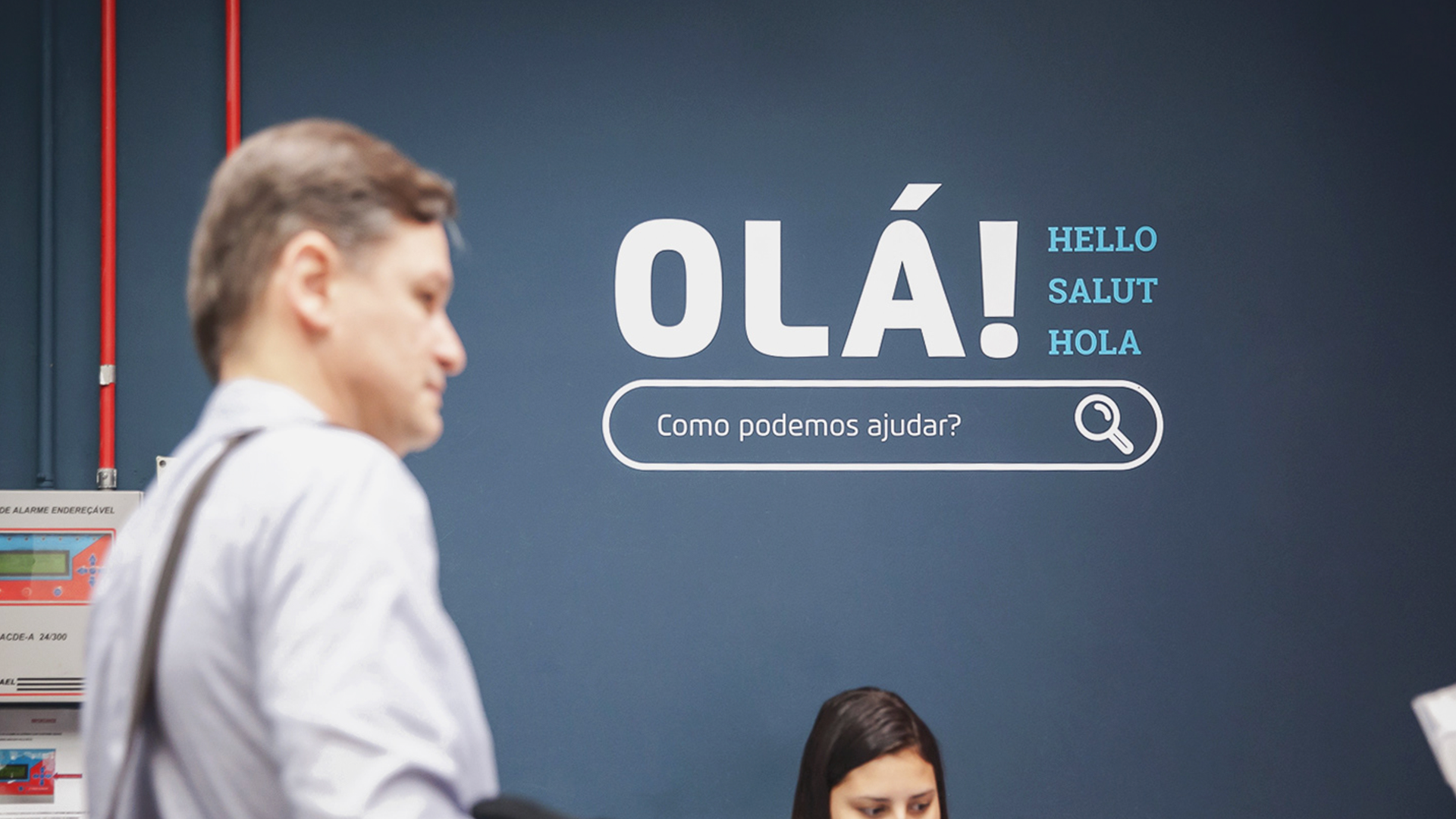
GPA IT Building
Environmental Graphics
Surface Design
Graphic Design
UX Research
Design System
Iconography
Illustration
Visual Identity
My Role: UX Designer (Environmental Graphics & UX)
Client: GPA (Grupo Pão de Açúcar)
Timeline: 3 months | 2017-2018
Team: Creative Director + myself
At Estúdio Kola, I had the opportunity to lead the graphic and surface design for the ambient branding of a four-story IT building for GPA. The project spanned almost three months and involved designing the entire visual system for wayfinding and environmental graphics across the reception and three floors.
The challenge was multifaceted: the building’s structure couldn’t be altered, budget and material constraints had to be respected, and the interior was inherently gloomy, with few windows and long work hours for employees from 9 a.m. to 7 p.m. Our goal was to create a joyful, functional, and visually coherent environment that would enhance navigation while subtly lifting the mood of the space.
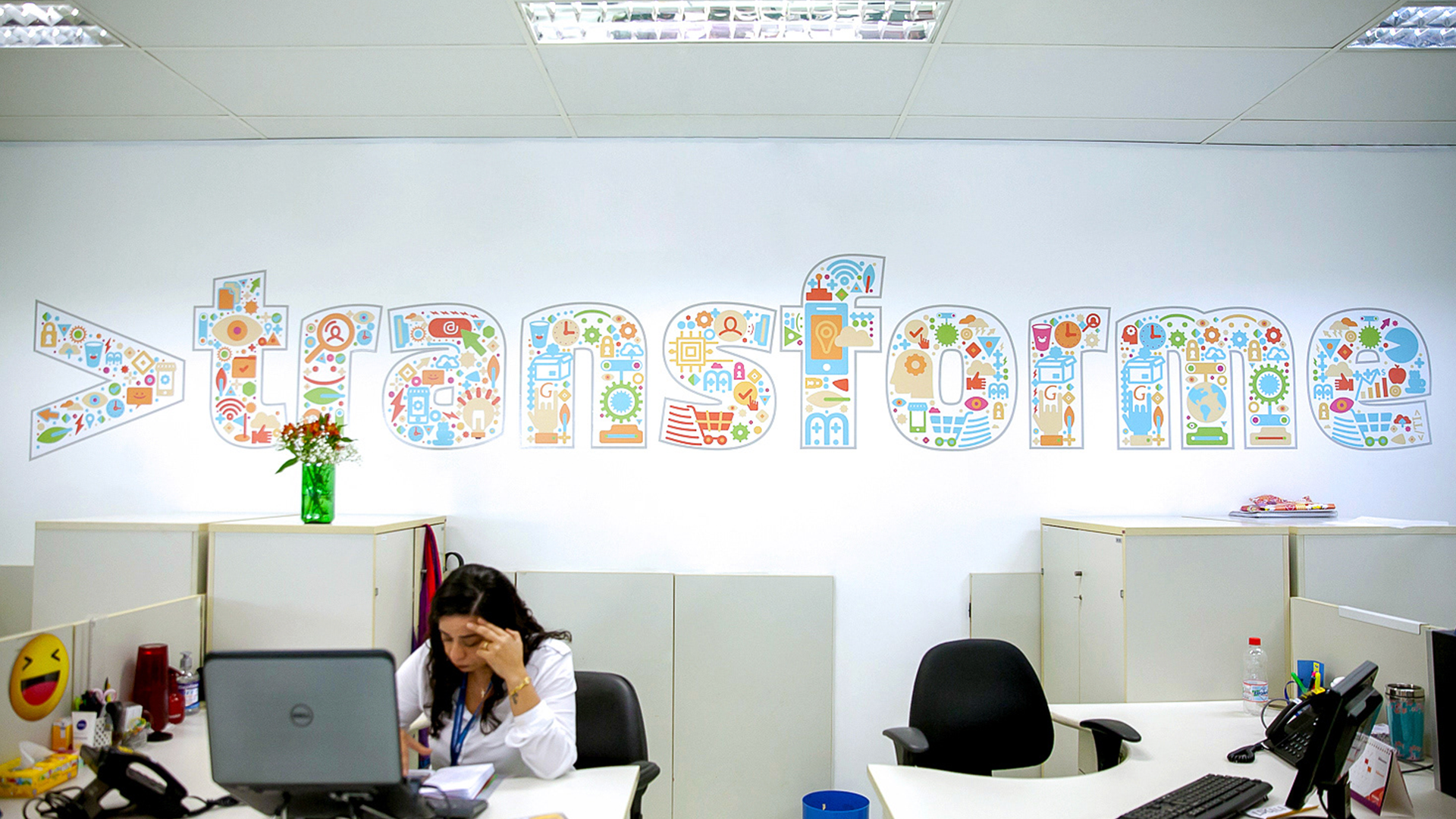
Working alongside the Creative Director, we developed custom iconography, illustrations, and color schemes that brought authenticity and a strong sense of identity to the building. Every graphic element was carefully crafted to blend harmoniously, avoiding visual fatigue while transforming a traditionally depressing office environment into a lively, navigable space.
Challenge
How do you transform a four-story corporate IT building, with an inherently gloomy atmosphere and long work hours, into a functional, navigable space that improves employee well-being?
Yes, that’s a big challenge. Into this case, I will show you how we went through an UX process to develop this physical user experience between human and workplace.
Key Constraints
Immutable building structure
Limited material budget
Few windows / minimal natural light
Typical depressing corporate office environment
UX Approach
We applied UX principles to physical space, treating navigation, visual identity, and well-being as an integrated experience system.
-
Visited the building at different times to understand movement flows and navigation confusion points;
Observed behaviors: where people stopped, asked for directions, or got lost;
Identified high and low-traffic zones;
-
Users (employees)
Navigate quickly between floors without getting lost
Intuitively identify areas (meeting rooms, cafeteria, etc.)
Feel energized despite long working hours
Client (GPA)
Reinforce corporate identity
Improve productivity by reducing navigation time
Create a more welcoming environment without structural renovations
Key Insights
Employees reported "all floors look the same".
Lack of visual landmarks caused disorientation.
Monochromatic environment contributed to visual and mental fatigue.
Concept & Design Strategy
Instead of just signage, we created an integrated system of:
Intuitive Wayfinding → Custom iconography for each space type → Clear visual hierarchy (primary/secondary/tertiary) → Cross-floor consistency while maintaining unique identity per floor.
01.
Floor Differentiation → Specific color palette for each floor → Unique graphic patterns functioning as landmarks → Surface design breaking monotony without causing visual fatigue
02.
Well-being Through Design → Vibrant colors to counterbalance gloomy environment → Illustrations bringing lightness and humanization → Visual rhythm naturally guiding movement
03.
Design Process
From the strategy to execution.
-
Created annotated floor plans identifying:
Decision points: where users choose direction;
Dead zones: the areas without visual references;
High-traffic areas: main corridors, elevators;
-
Developed hierarchical visual taxonomy:
Level 1: Floor identification (large scale, distinct colors)
Level 2: Functional zones (icons + typography)
Level 3: Individual rooms (integrated numbering system)
-
Created reusable graphic component library:
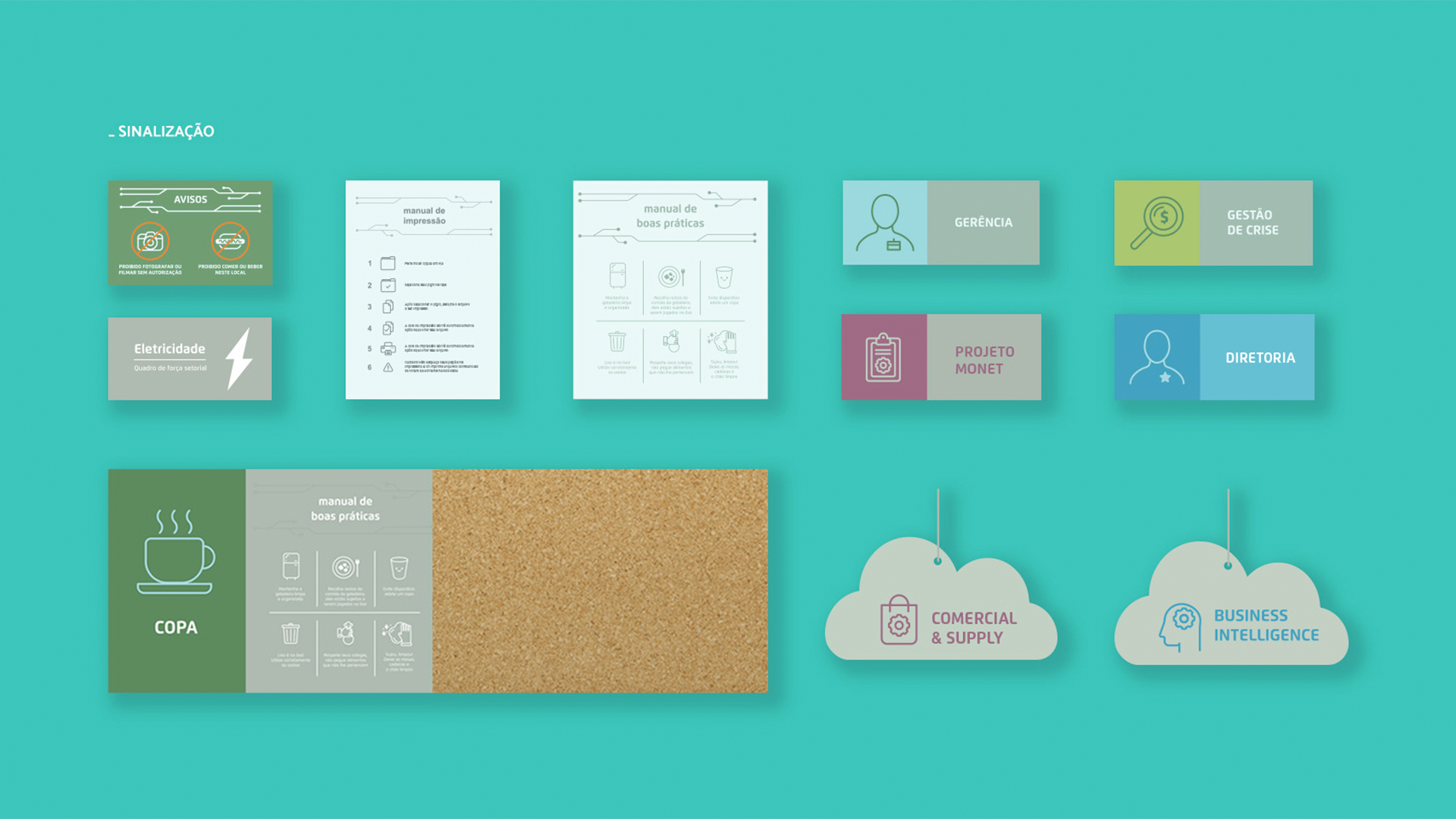
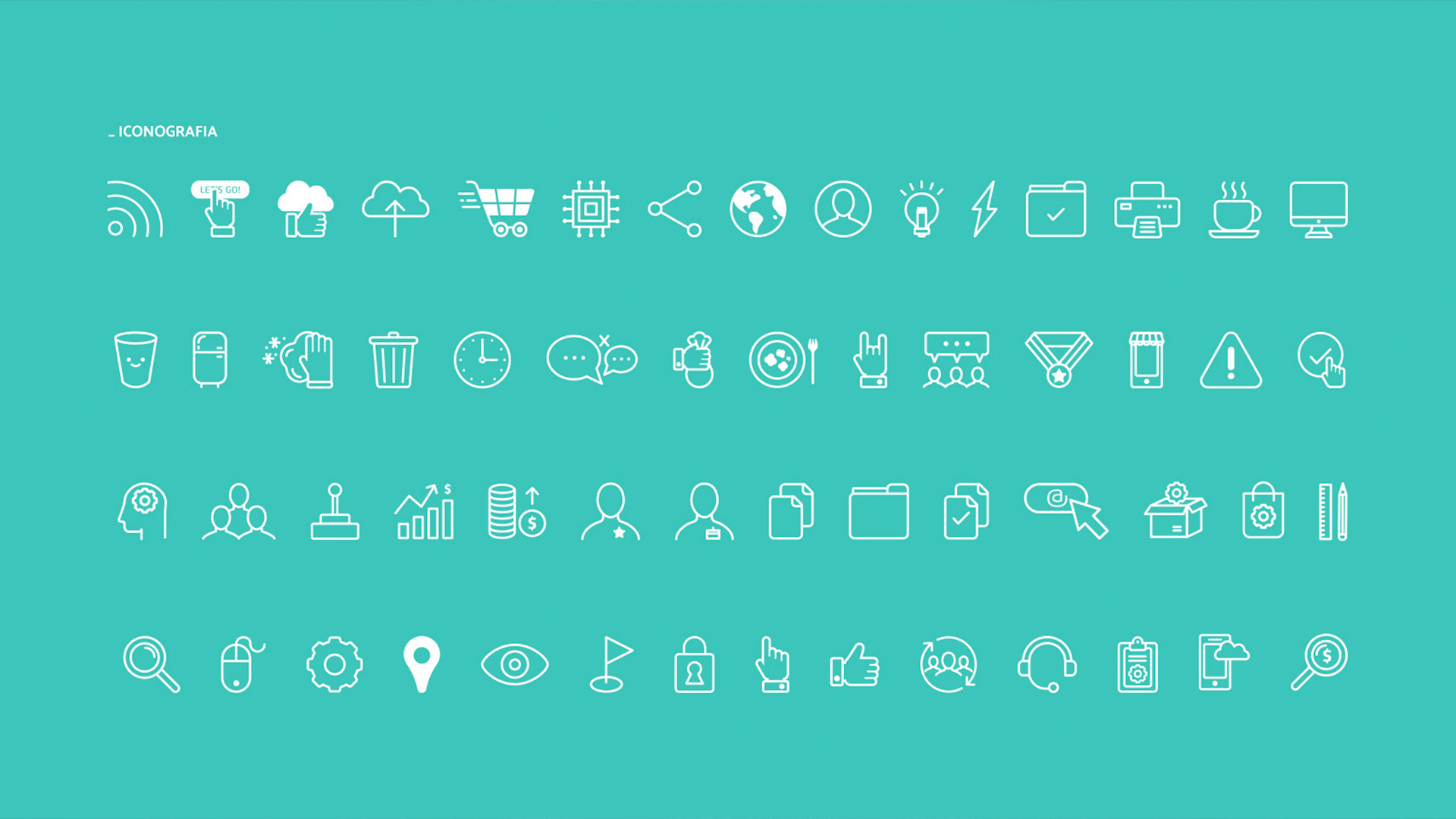
20+ custom icons for different space types;
Grid system for consistent application;
4-color palette (1 per floor) + neutrals;
Scalable surface patterns;
-
Full-scale mockups to test legibility and visual impact;
Iterations based on client feedback and production considerations;
Technical specifications for execution team;
-
Supervised application across different materials (vinyl, paint, acrylic);
Quality assurance during installation.
Deliverables
Complete spatial identity system applied across 4 floors:
Wayfinding System
Directional and informational signage
Standardized room nomenclature
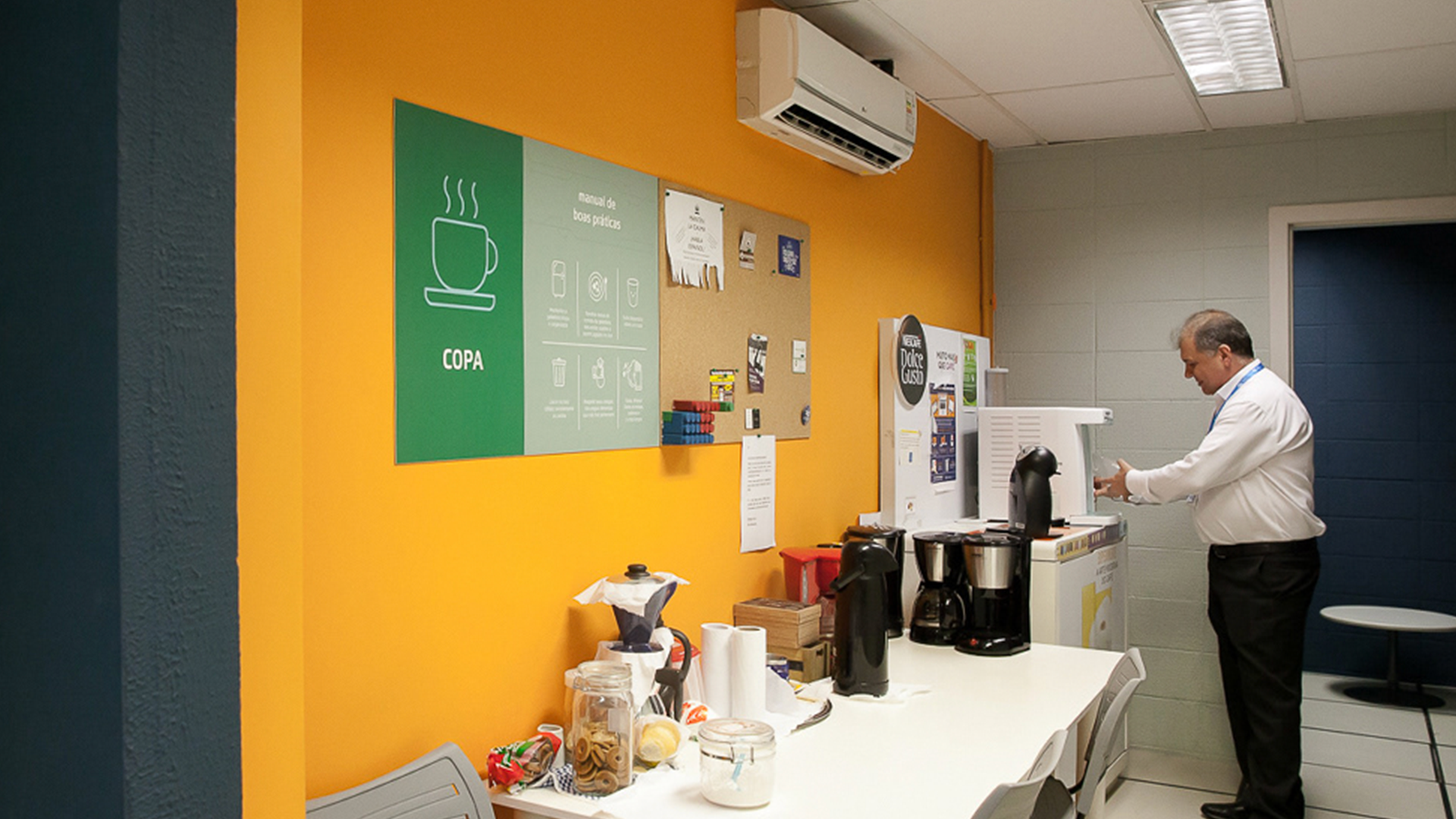
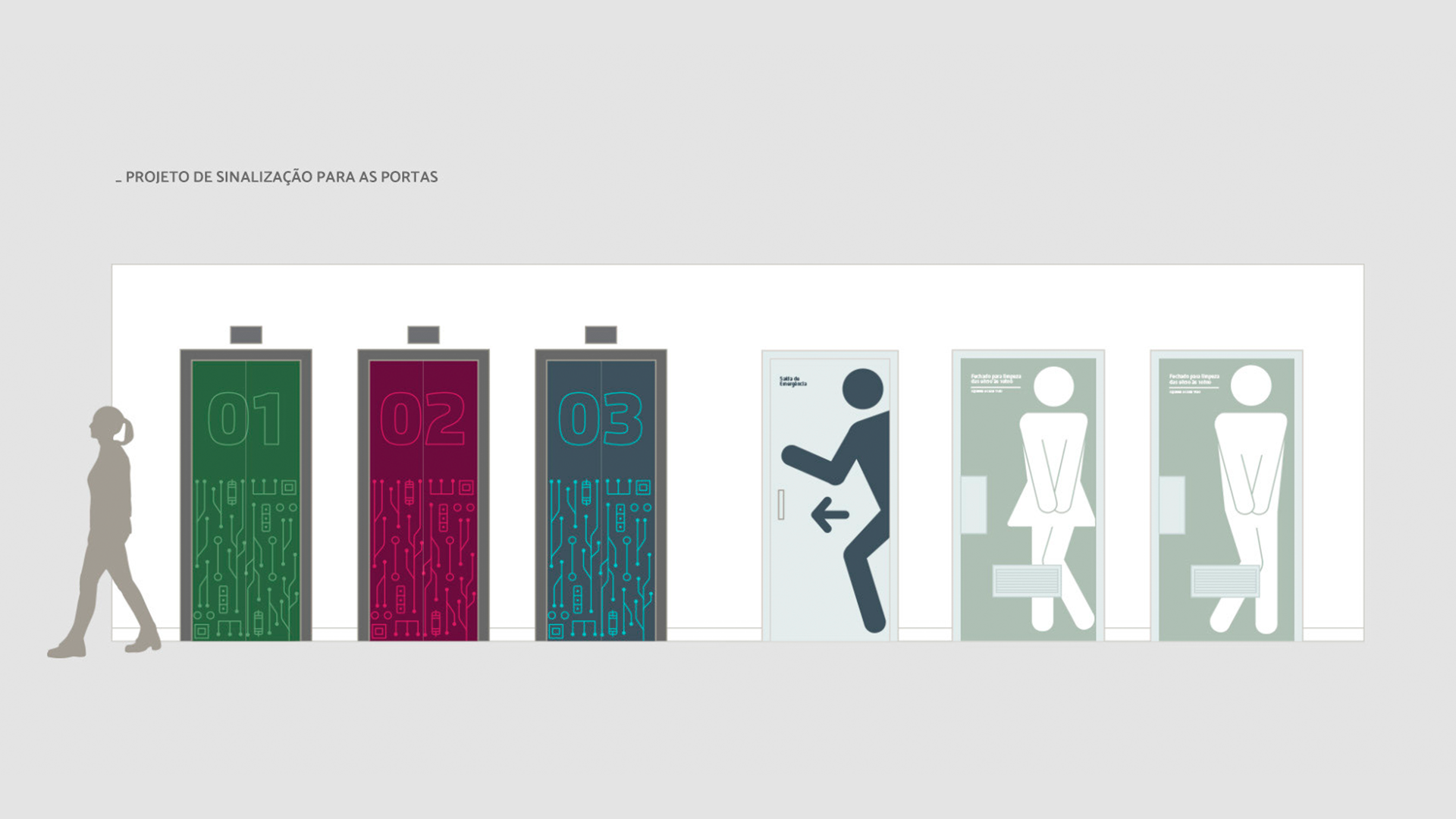
Service iconography (restrooms, coffee,
meeting rooms, etc.)
Environmental Graphics
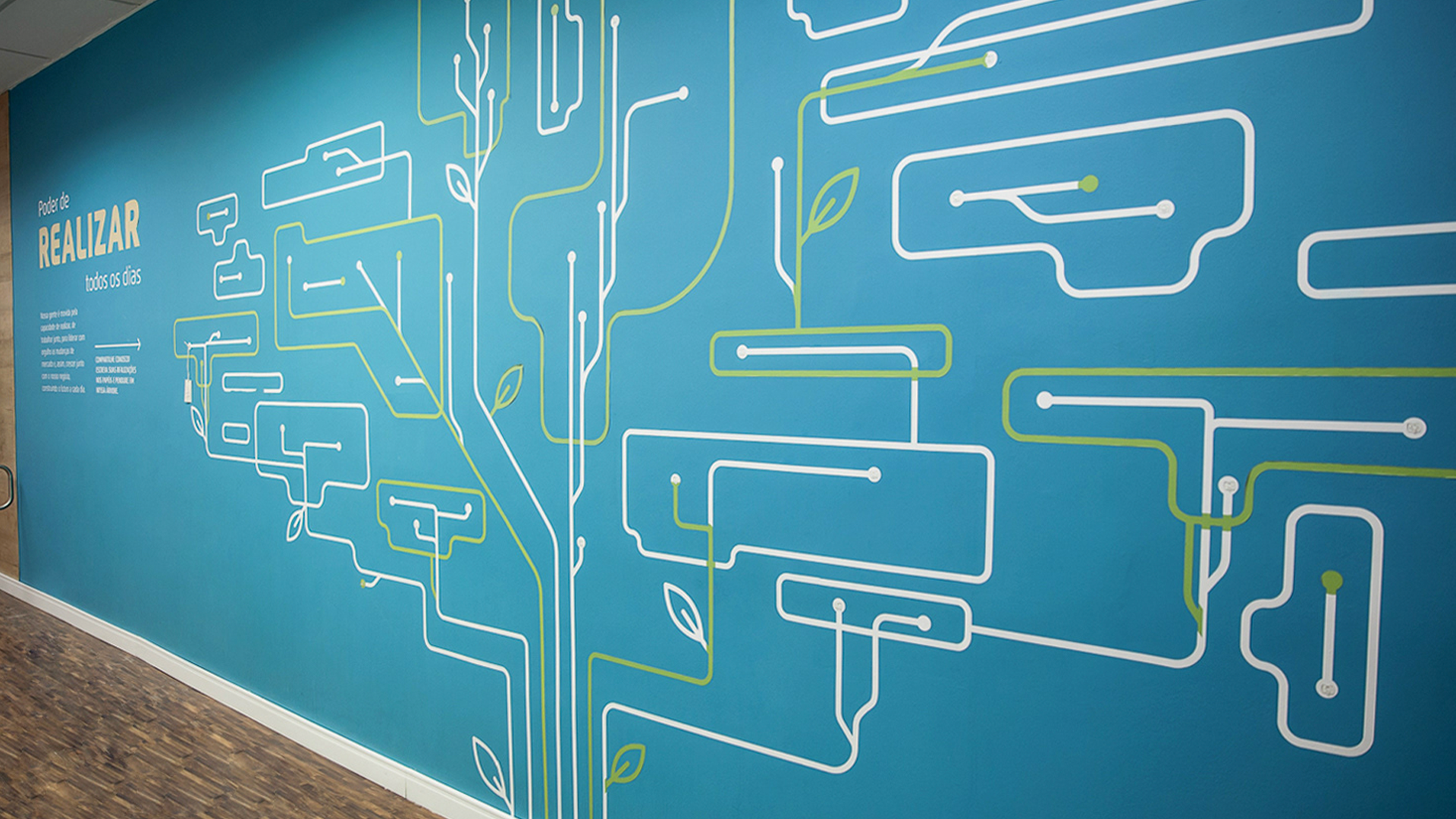
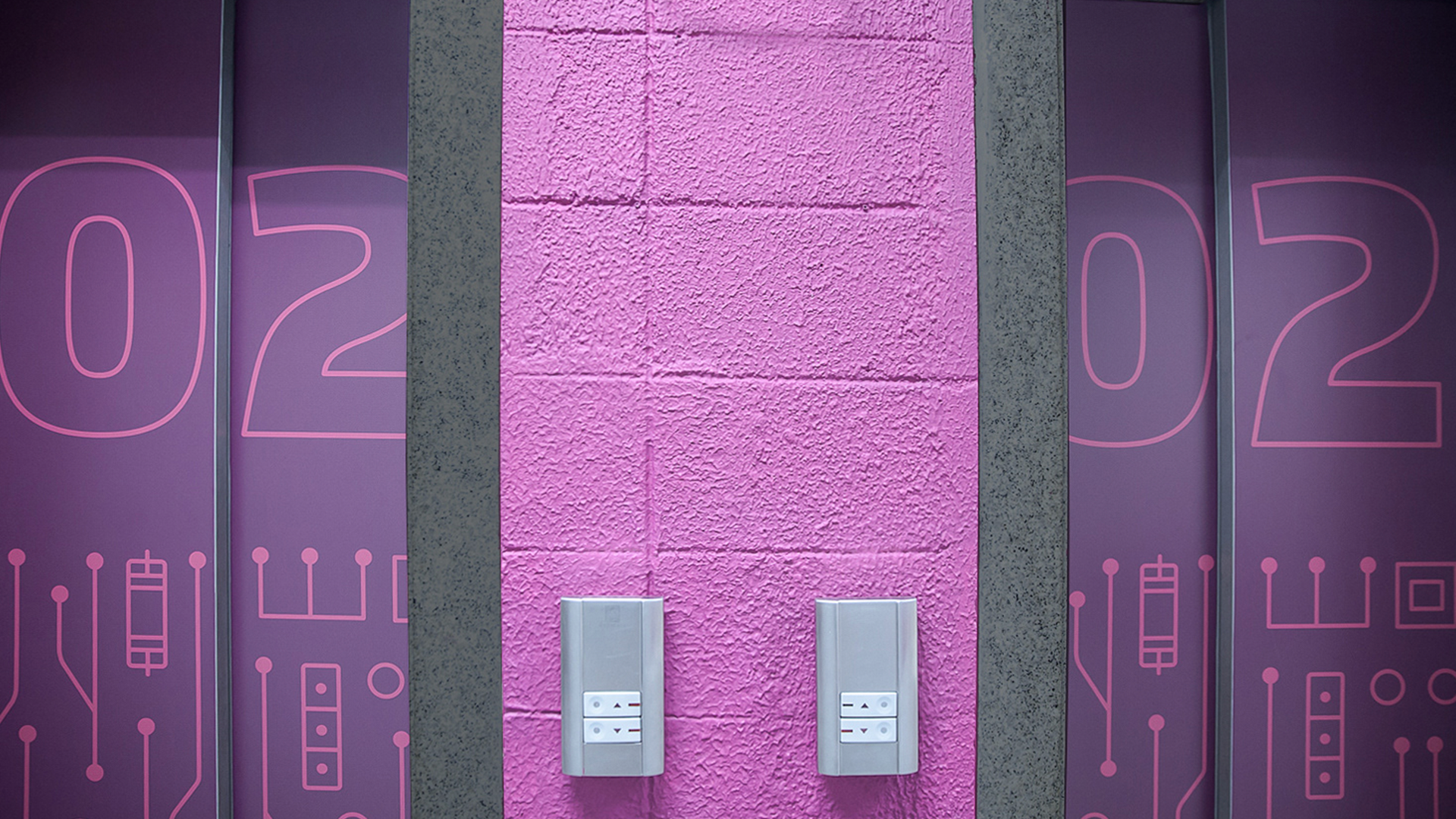
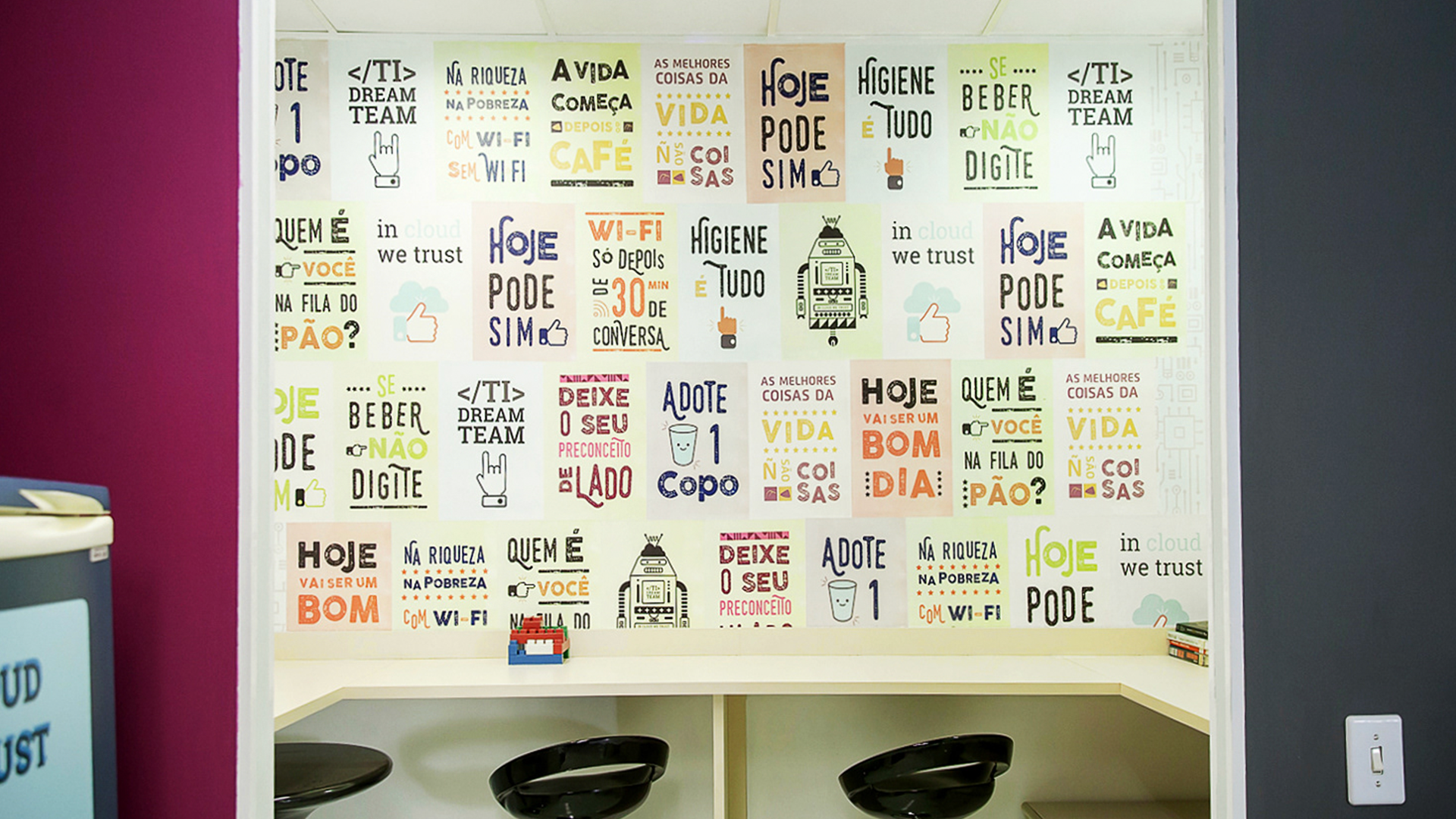
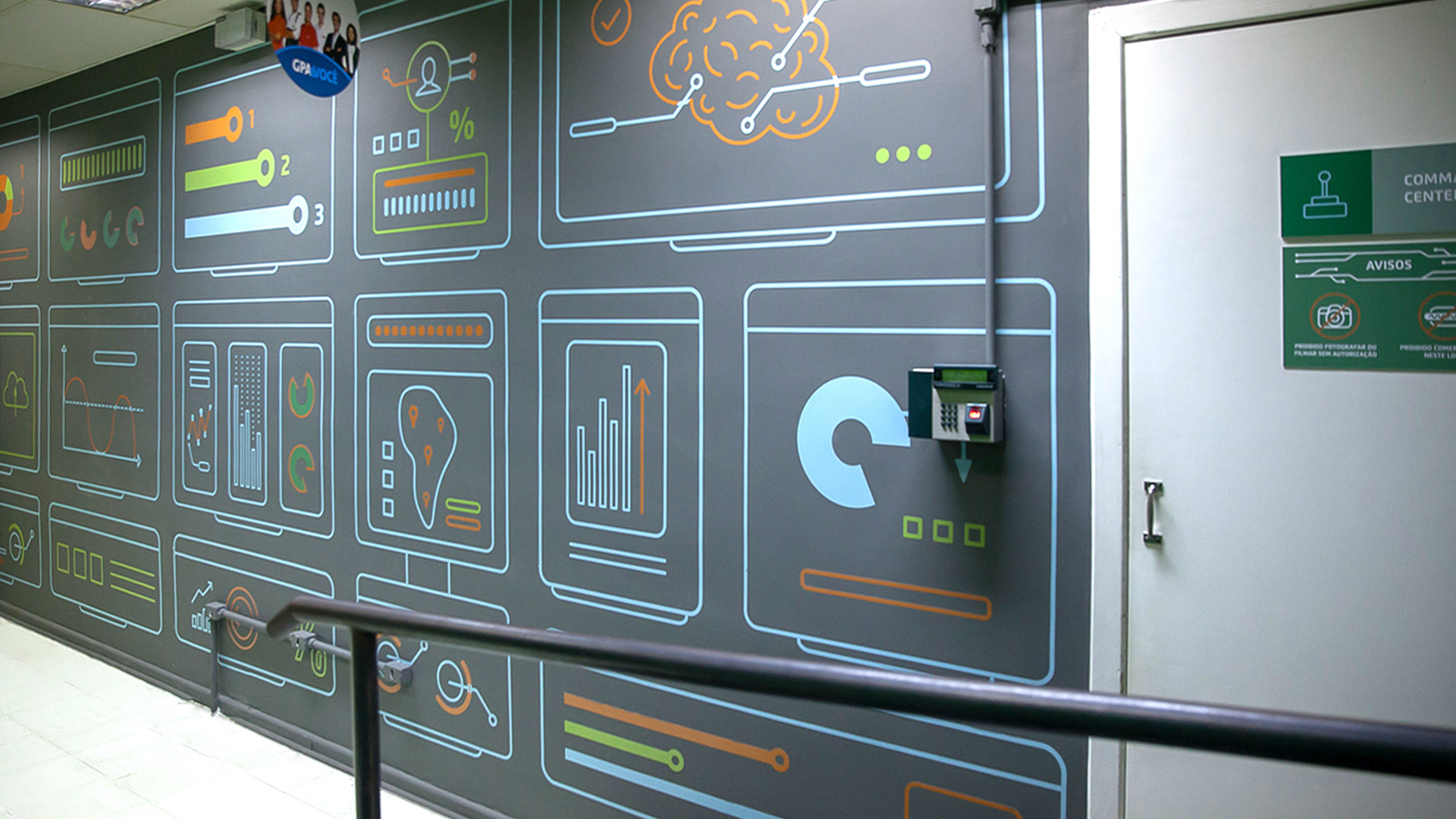
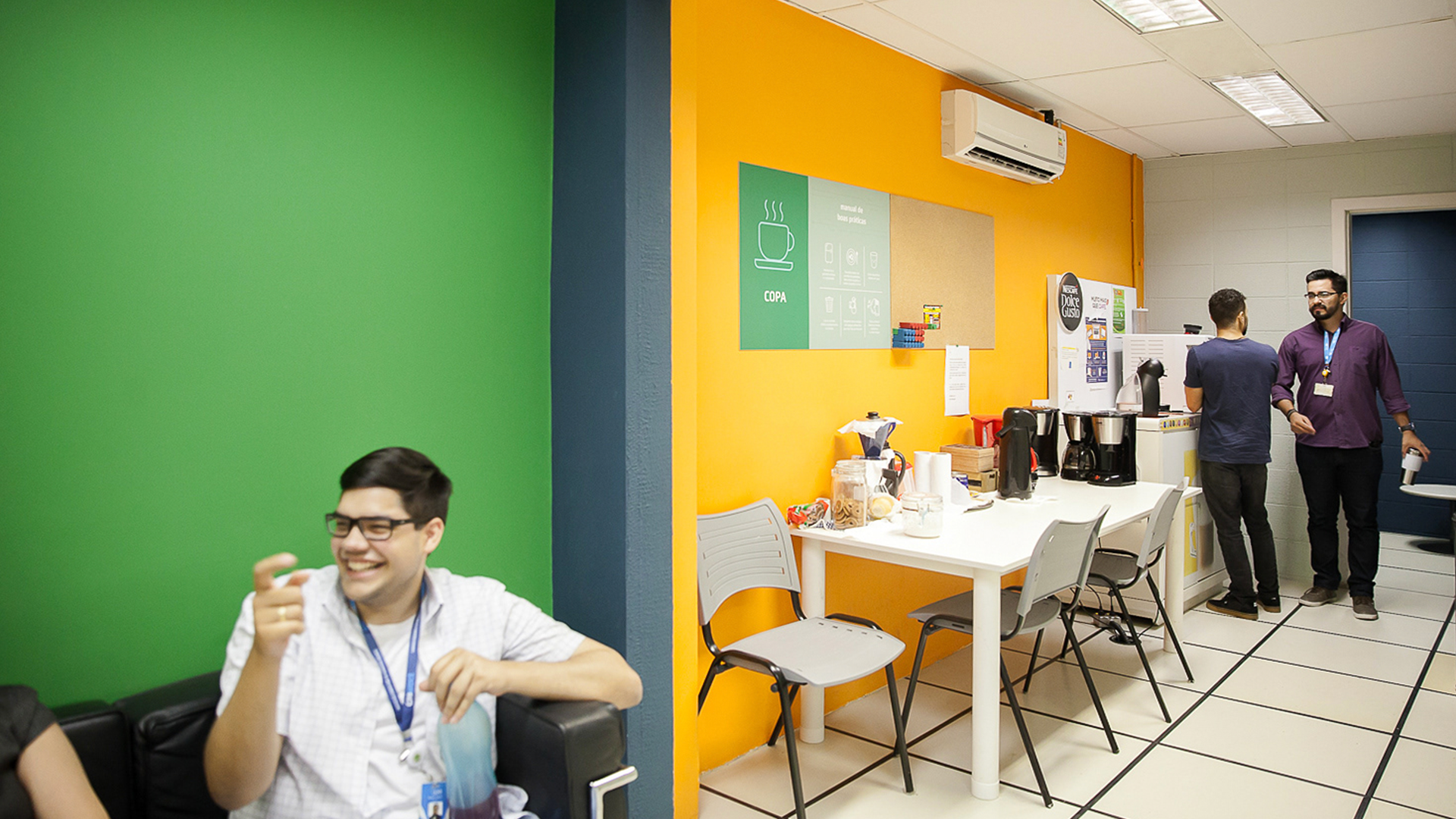
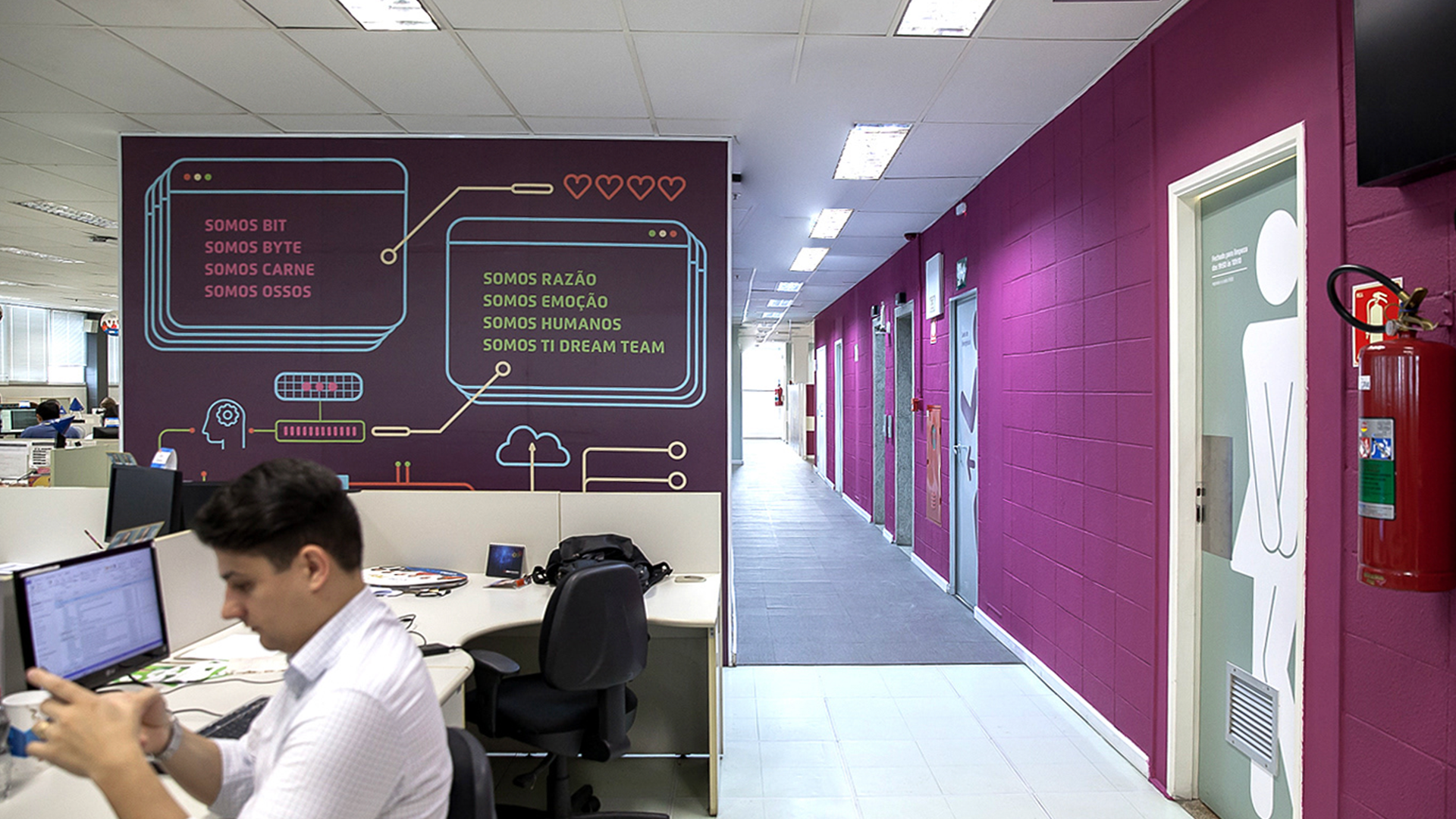
Illustrated murals in common areas
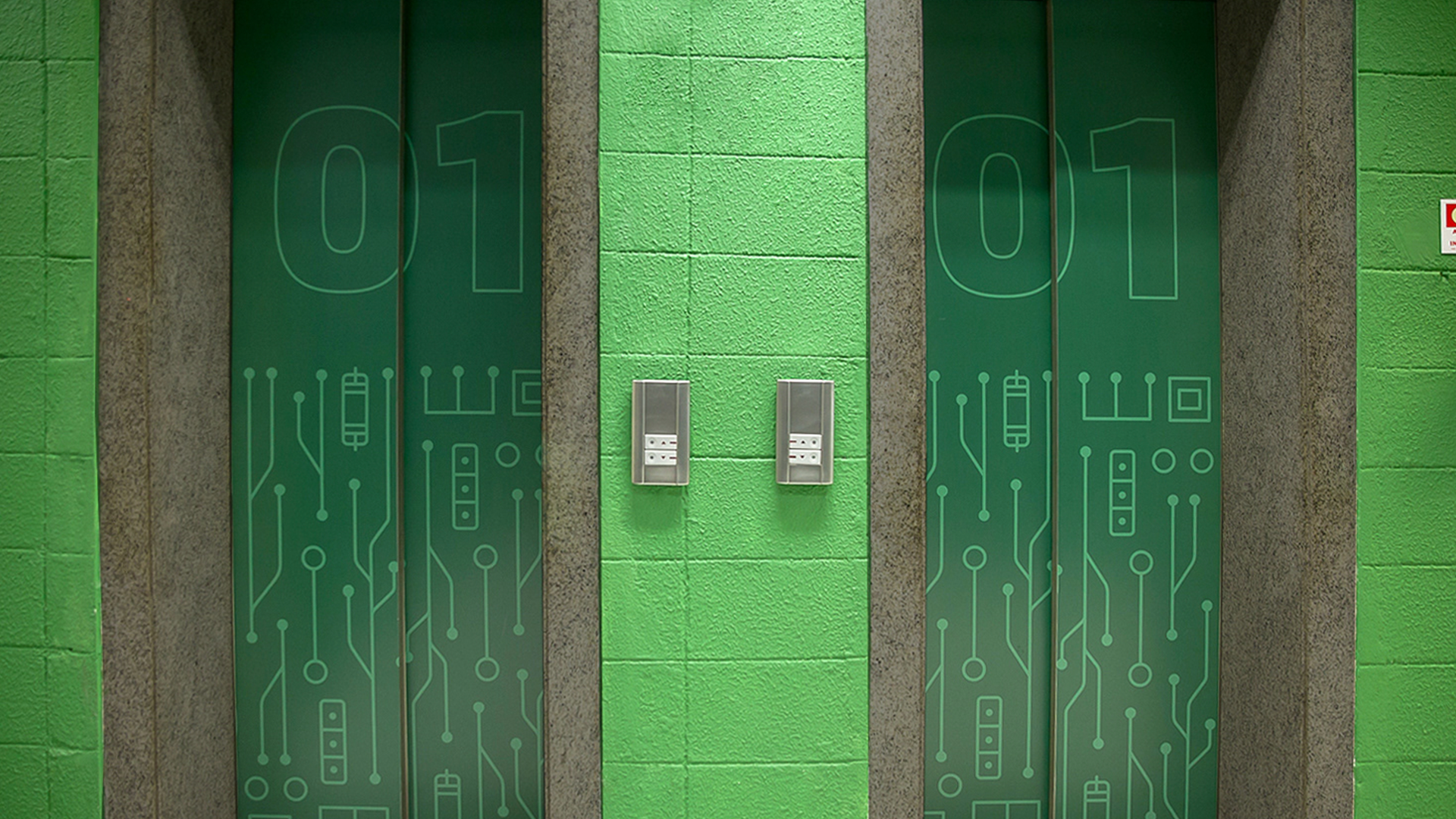
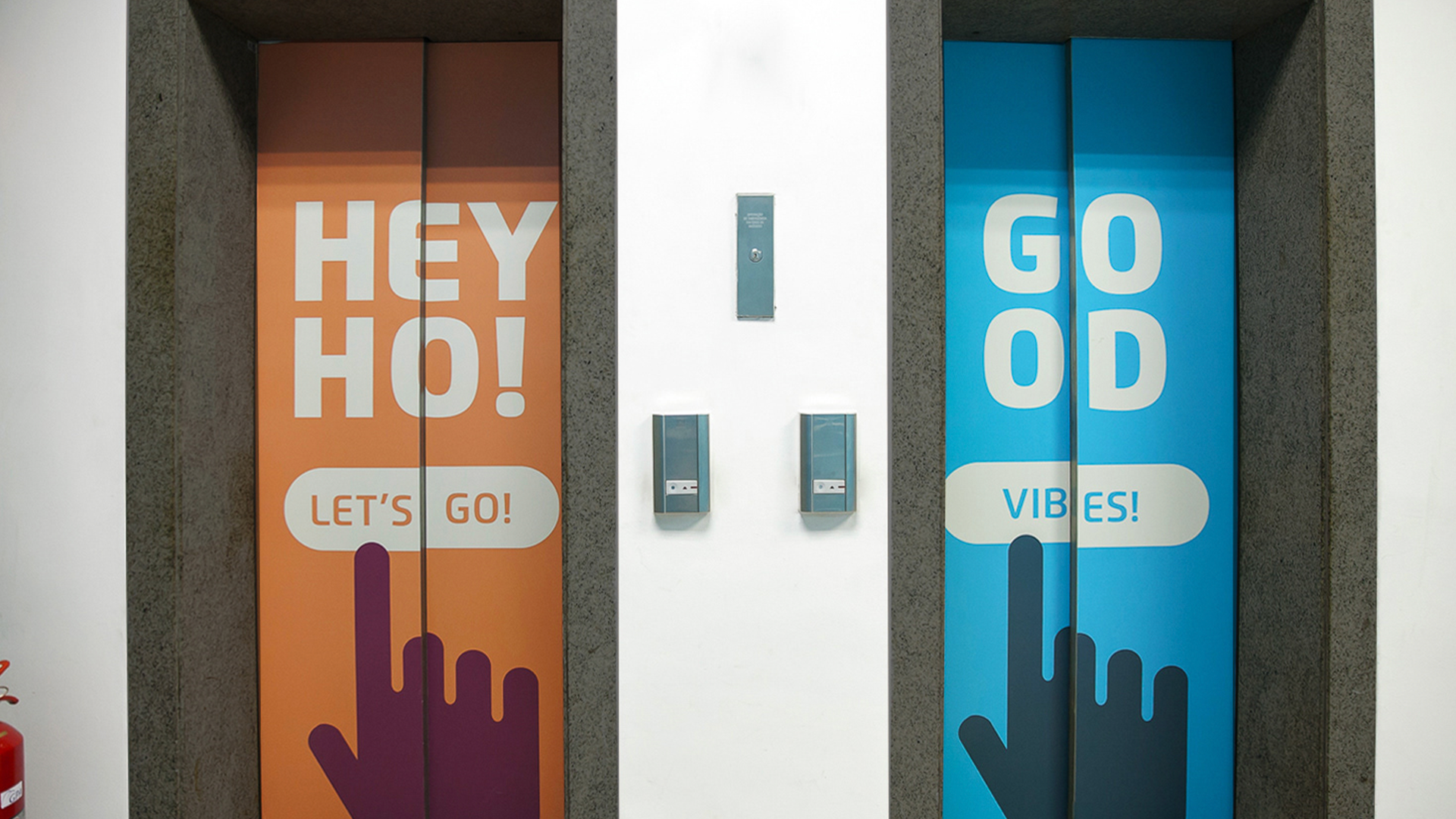
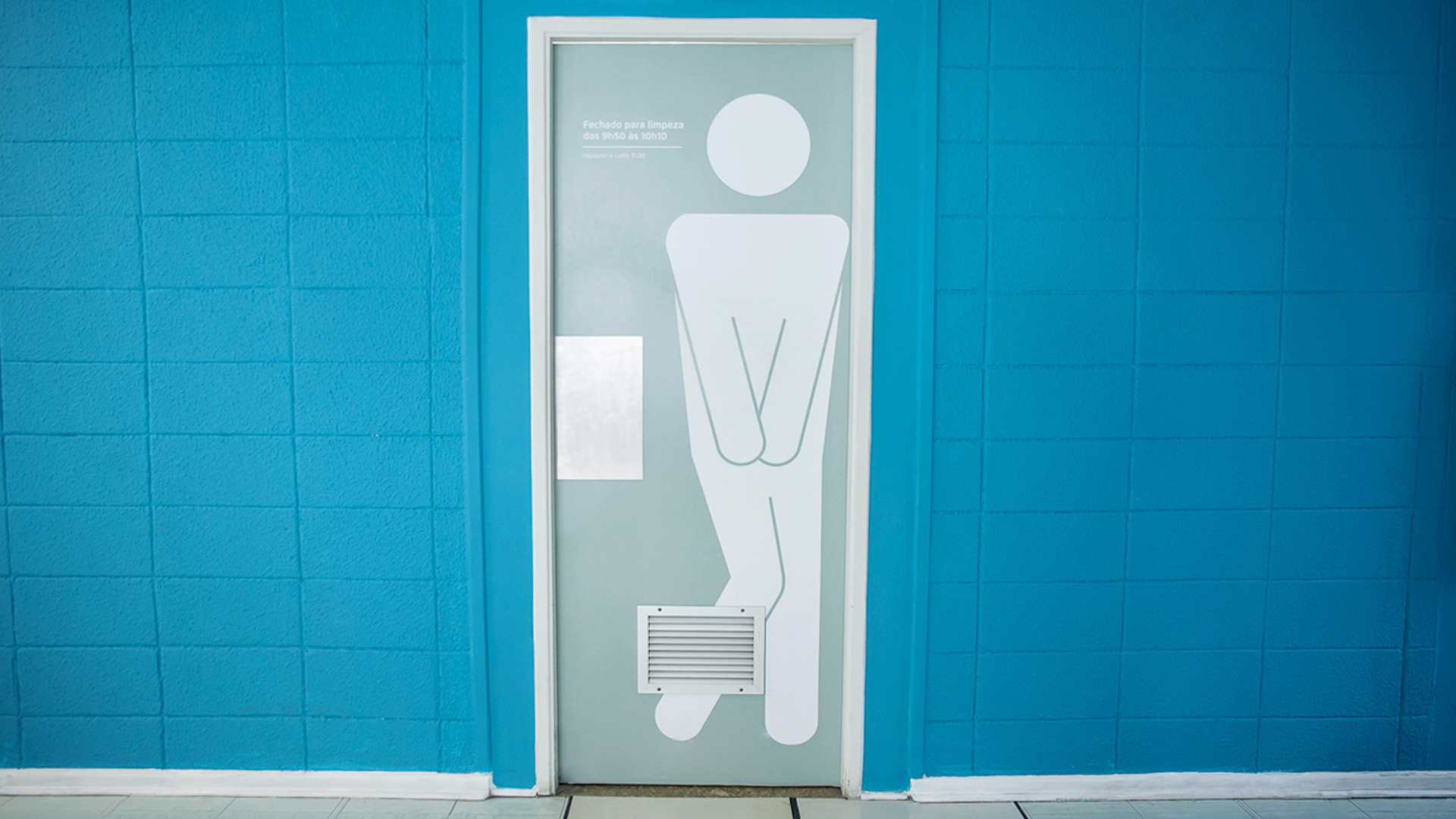
Surface patterns on walls and doors
Branded elements integrated into space
Design System Documentation
Application manual for future expansions
Vector asset library
Material and color specifications
Impact
User Experience
Simplified navigation: employees can quickly locate spaces without asking;
More welcoming environment: positive feedback on "livelier space";
Clear visual landmarks on each floor: facilitate spatial orientation;
Business Value
Scalable system implemented within budget;
Strong visual identity reinforcing company culture;
Project completed in 3 months respecting tight timeline;
Design
Modular system allows future expansions without rework
Reusable component library for other GPA projects
Learnings
UX extends beyond digital interfaces: principles of hierarchy, visual feedback,
and wayfinding apply equally to physical spaces;Constraints fuel creativity: working with limited budget and immutable structure forced smarter solutions;
Systemic design > point solutions: creating a modular system ensures consistency
and easier maintenance;Multidisciplinary collaboration is essential: working with suppliers, architects, and end client required clear communication and alignment.